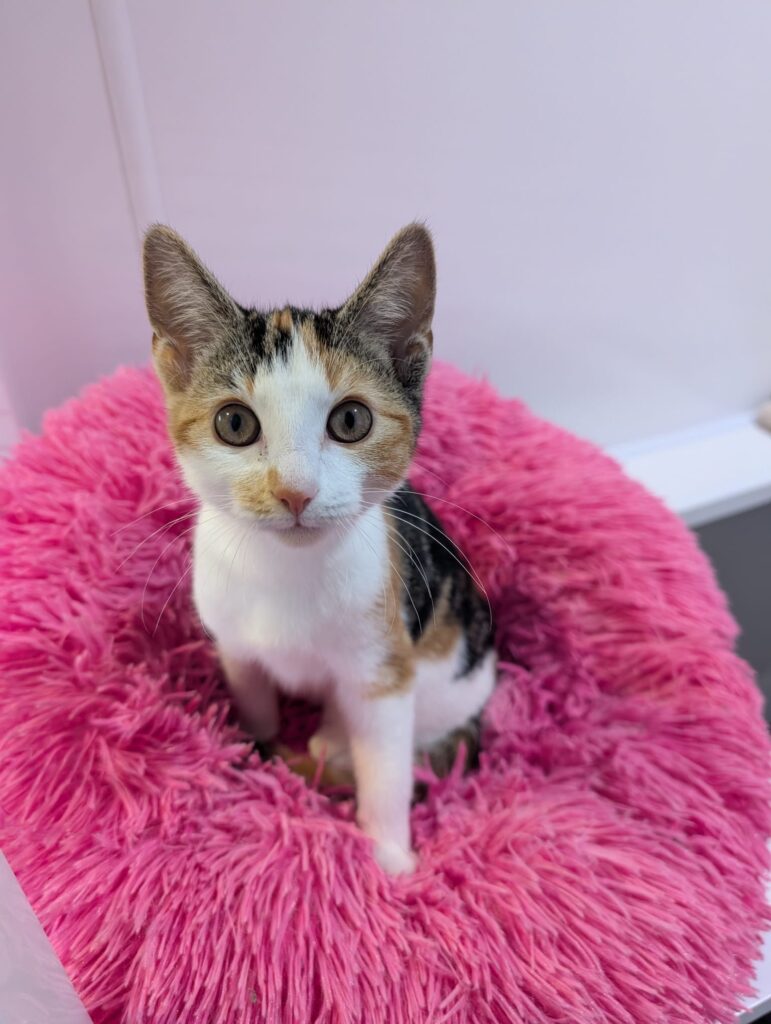
The RSPCA Solent Branch CIO wants to find homes for all the rescued animals in our care. The following policy helps us to make sure that every animal finds the perfect home where they can live a happy, healthy life.
Our rehoming process aims to make sure pets and owners are well matched and a fair process is followed.
Animals may have come to the Branch’s care for example, by being signed over by the animal’s previous owner, seized by the RSPCA Inspectorate, found abandoned, lost and of unknown background. Stray dogs are signed over by the local authority concerned. For stray animals, we keep them for at least seven days in order to give their owners a good chance to reclaim them.
The Branch will not import animals from other countries for rehoming in England and Wales.
Animals will have received a clinical examination by a veterinary surgeon prior to their adoption.
No animal may be rehomed to anyone without identification and confirmation they are over 18 years old.
No animal may be rehomed without reasonable steps to make sure they will have a good quality of life. Once we’ve found a match for an animal in our care, checks will be carried out by one of our trained staff to make sure potential adopters are suitable for that specific animal and their needs.
Potential adopters will be required to meet an animal in person, some animals will require multiple meetings prior to adoption. No animal should be rehomed over the internet, or by mail-order or telephone. No animal is ever sold at a market or given as a prize. All our animals are rehomed as pets.
For those potential adopters who live in rented, leasehold or tied accommodation, you will need written permission from the landlord or leaseholder to keep animals.
No animal may be rehomed if doing so would be illegal or create undue risks to humans or other animals. We don’t rehome animals such as dogs, cats or ferrets to adopters who are likely to use them to hunt live animals or for use as guard dogs.
We will always provide copies of the veterinary and behavioural history of the animal while they have been in our care and provide post-adoption support to help the animal settle into their new home.
As part of the rehoming procedure, the Branch makes sure that all dogs, cats, rabbits and male guinea pigs are neutered and vaccinated, as appropriate to the individual. If for any reason they cannot be neutered before rehoming, they will not be rehomed to a home with other animals of the same species that are unneutered. If for any reason the RSPCA animal is unvaccinated, they will not be rehomed to a home with other unvaccinated animals of the same species. As appropriate the RSPCA animal will return to the centre to be neutered and vaccinated.
Any animals rehomed unneutered must not be used for breeding.
All domestic birds are rehomed to an aviary environment with other compatible birds unless under specific behavioural or medical advice.
All cats unless under specific behavioural or medical advice will be rehomed with suitable access to the outdoors to enable them to display their natural behaviours.
We also make sure that all rehomed cats, dogs and rabbits are identified by an implanted microchip.
Rabbits and guinea pigs will be rehomed in or into compatible neutered pairs/ groups. The RSPCA will not rehome rabbits or guinea pigs to live on their own unless under specific behavioural or medical advice.
Kittens and puppies will be at least eight weeks old before rehoming.
No RSPCA animal should be kept in a school – the RSPCA strongly discourages the keeping of animals in schools. Also, no animal may be adopted out for use in experimentation that requires a Home Office licence.
No RSPCA animal may be rehomed to countries lacking adequate animal welfare legislation or requiring journeys that compromise their welfare.